
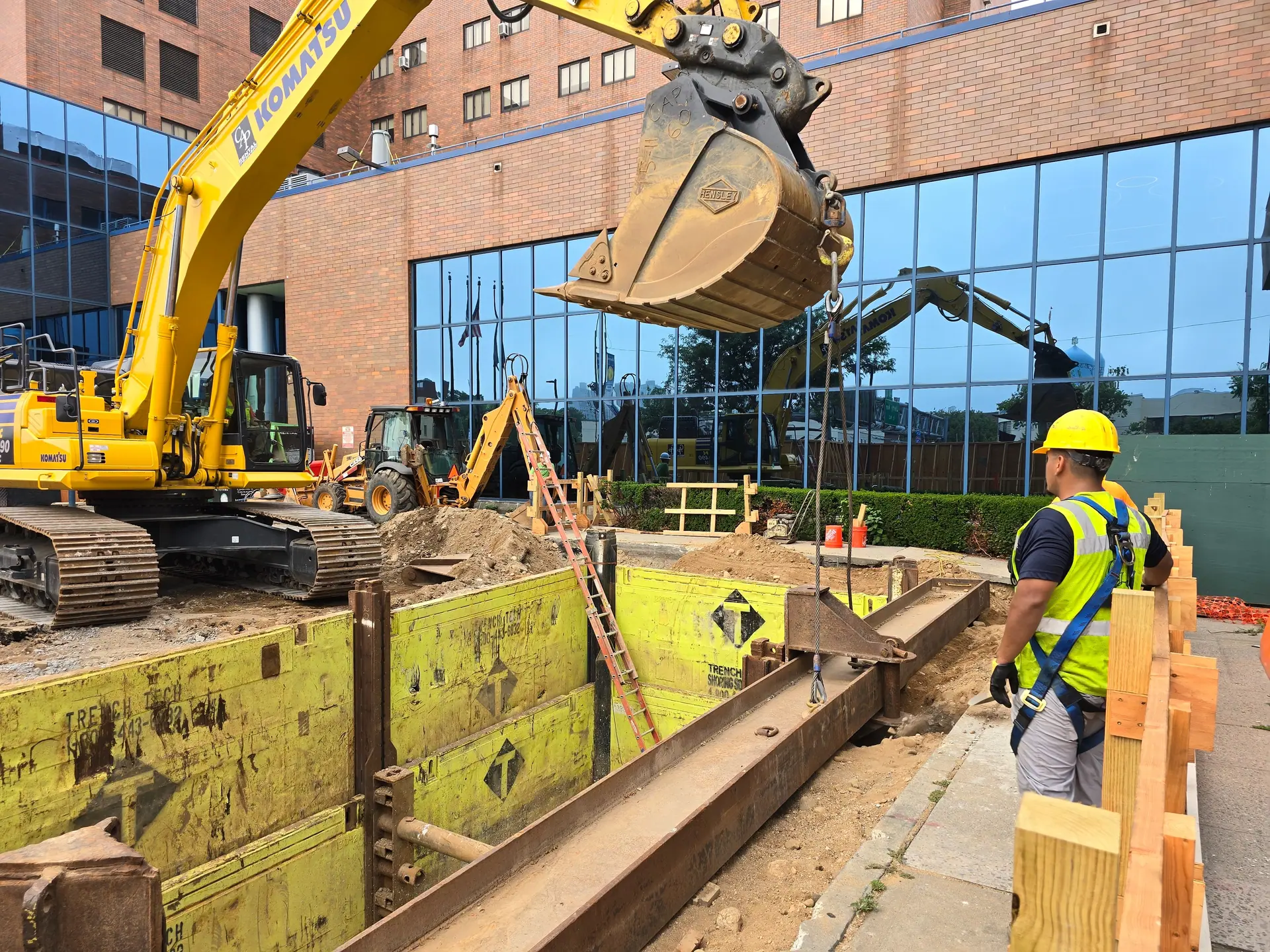
Construction Expertise
We Understand How Contractors Actually Make Money.
Every project affects profitability, cash flow, working capital, bonding capacity, and future opportunity. We work where those connect.
Construction accounting is its own discipline. Revenue is earned as work is performed, not as invoices are paid, so percentage-of-completion decisions change what the statements say. Profit on a job moves as estimates move. The work-in-progress schedule is the first thing a surety underwriter reads, job costing has to hold up contract by contract, and bonding requirements shape how working capital and equity are presented. Any firm can produce a set of statements. Preparing them so a surety can rely on them is a different skill.
What We Do
Six Areas Where Our Work Changes the Outcome
Reviewed Financial Statements
Review-quality reporting prepared the way surety underwriters and bank credit officers expect to read it.
WIP Reporting
Work-in-progress schedules that hold up under review, with over- and under-billings explained before anyone asks.
Job Costing
Profitability by job, by crew, by type of work — so estimating and field decisions rest on real numbers.
Percentage-of-Completion
Method selection and application handled consistently for book, tax, and bonding purposes.
Bonding Capacity
Working capital and equity presented to support the single and aggregate limits your next job requires.
Tax Planning & Advisory
Entity and method decisions, look-back, equipment timing, growth, and succession — planned across the year.
The Agencies Our Clients Serve








Agency marks are shown to indicate the public work our clients perform and do not imply endorsement, affiliation, or approval by those agencies.

Anthony’s Perspective
Experience Has Taught Me to Look Ahead
“The best time to address a financial issue is before it becomes a problem.”
Their CPA should be looking ahead with them.
Contractor FAQ
Questions Contractors Ask Us
Why shouldn’t I just see my CPA at tax time?
Because by tax time, many of the best planning opportunities are already behind you.
We prefer to work with clients throughout the year. Reviewing financial results, work-in-progress, cash flow, equipment needs and projected taxes before year-end gives us an opportunity to plan rather than react.
Your tax return should be the result of good planning, not the beginning of it.
How can my CPA help me improve my bonding capacity?
Bonding capacity is influenced by much more than revenue.
Sureties look closely at working capital, equity, profitability, cash flow, backlog, work-in-progress and the overall financial strength of the company.
Our role is to help contractors understand how business decisions affect those measurements and to prepare financial statements that clearly present the company’s financial position to the surety community.
There is no single formula for increasing bonding capacity. It is usually the result of building a stronger business over time.
Should I buy equipment before year-end to save taxes?
Maybe, but taxes should never be the only reason to purchase equipment.
We look at whether the equipment is actually needed, how it will be financed, its effect on cash flow and working capital, available depreciation opportunities, and how the transaction fits into the company’s overall financial and bonding strategy.
A tax deduction is valuable. Maintaining financial strength is more important.
Why did I get surprised by a large tax bill?
Usually because tax planning happened too late.
Construction companies can experience significant changes in profitability, work-in-progress and cash flow during the year. Waiting until the return is prepared leaves fewer opportunities to respond.
We prefer to project the tax position before year-end so clients understand what is coming and have time to evaluate appropriate planning strategies.
Should I take distributions from the company?
Distributions need to be considered in the context of the entire business.
Cash may be available, but removing too much capital can weaken working capital and equity, two measurements that may be important to your bank and surety.
We help clients evaluate distributions in relation to taxes, cash requirements, upcoming projects, bonding needs and the financial strength of the company.
When should I call my CPA?
Before making the decision.
Call us before purchasing major equipment, taking a large distribution, obtaining financing, changing ownership, entering a significant contract, expanding into a new area, or making another material financial decision.
A ten-minute conversation before a transaction can be much more valuable than trying to address the consequences afterward.
Do I really need reviewed financial statements?
That depends on the needs of your business.
As contractors grow, sureties and lenders frequently require a higher level of financial reporting. Reviewed financial statements provide additional assurance and can become an important part of supporting bonding and credit relationships.
We help clients determine the appropriate level of reporting based on where their businesses are today, and where they want them to go.
What does my work-in-progress schedule tell you?
A great deal.
The WIP schedule helps us understand estimated profitability, job performance, backlog, overbillings, underbillings and whether projected margins are holding up as projects progress.
For a construction company, the WIP isn’t simply another accounting schedule. It is one of the most important tools for understanding what’s happening inside the business.
Have a question we haven’t answered?
Construction businesses rarely fit neatly into a textbook.
If you are a contractor, surety professional, banker, attorney or advisor and have a question about a construction company, we’d be happy to have a conversation.
Talk to a CPA Who Speaks Construction
Bring your WIP schedule, your bonding goals and the questions that don’t fit a textbook. A partner will walk through them with you.